EN
EN VN
VN (+61) 402 7525 23
  Sales@dicom-interactive.com

 Introduction
Vietnam has become one of the leading destinations for software outsourcing in Asia, offering a combination of skilled developers, competitive pricing, and growing experience in global product development.
From enterprise-scale vendors to boutique digital teams, the country provides a wide spectrum of outsourcing partners tailored to different business needs.
This guide highlights 10 of the most reputable software outsourcing companies in Vietnam, based on:
- Technical capabilities
- Project delivery experience
- Client fit (enterprise vs startup)
- Flexibility and specialization
 FPT Software
Enterprise Software Outsourcing Leader in Vietnam

Website: https://www.fpt-software.com
Founded: 1999
Team Size: 25,000+
Typical Rate: ~$25–$50/hour
 Overview
FPT Software is the largest software outsourcing company in Vietnam, known for handling enterprise-scale projects across banking, telecom, and large digital transformation initiatives.
Backed by FPT Corporation, it operates globally with delivery centers in Asia, Europe, and the US.
 Key Strengths
- Strong in enterprise systems (ERP, banking, telecom)
- Large-scale cloud, AI, and data projects
- Ability to deploy large engineering teams quickly
- Mature processes and global delivery model
 Working Style
FPT follows a structured, process-driven approach:
- Dedicated account managers
- Clear reporting layers
- Formal communication
 Reliable, but not very flexible.
 Best For
- Large enterprises
- Long-term, complex systems
- Projects requiring compliance and stability
 Not Ideal For
- Startups or small teams
- MVPs or fast iteration projects
- Clients needing direct dev communication
 Pricing Insight
FPT is mid-to-high range in Vietnam. You’re paying for:
- Scale
- Structure
- Reliability
Not speed or flexibility.
 Pros & Cons
 Pros
Pros
- Massive capacity
- Proven enterprise experience
- Global delivery capability
 Cons
Cons
- Slower decision-making
- Less flexible
- Overkill for smaller projects
 Quick Verdict
FPT Software is a strong choice for enterprise outsourcing, but not the best fit for modern, fast-moving digital products.
 Best when you need scale and stability
 Not when you need speed and agility
 Dicom Interactive
Agile Software Outsourcing Partner Focused on eCommerce & Modern Web Platforms
Website: https://dicom-interactive.com
Scale: Boutique team
Typical Rate: ~$18–$25/hour
 Overview
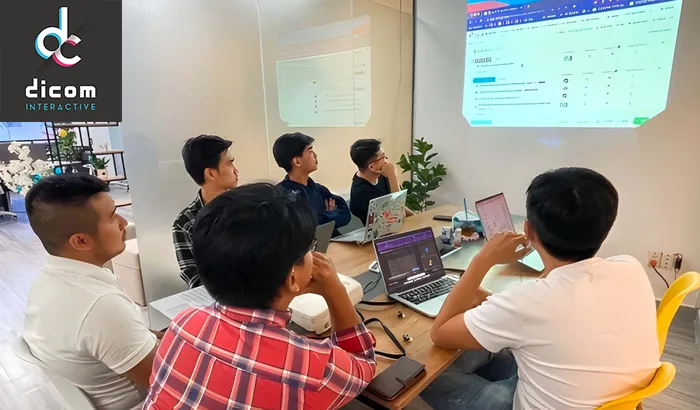
Dicom Interactive represents a different category of software outsourcing companies in Vietnam. While many vendors in the region are structured around large-scale enterprise delivery, Dicom focuses on modern digital product development, particularly in web and eCommerce.
Rather than acting purely as a task-based vendor, Dicom tends to operate closer to a product engineering partner, working with clients throughout the lifecycle of a product — from initial build to iteration and optimization.
This positioning makes it more comparable to a specialized digital product team than a traditional outsourcing provider.
Key Strengths
I. Focus on Modern Web Technologies
Dicom’s core strength lies in building applications using modern, scalable web stacks, including:
- Headless architecture (frontend + backend decoupled)
- Next.js / React-based applications
- Shopify (including headless Shopify setups)
- API-driven systems and integrations
This focus allows them to support businesses that are moving away from traditional monolithic platforms.
II. Strong eCommerce Capability
One of Dicom’s standout areas is eCommerce development, especially:
- Custom storefronts
- Headless commerce implementations
- Integration with marketing and analytics tools
- Performance optimization for conversion-focused websites
This makes them particularly relevant for brands that want more control and flexibility than standard Shopify or CMS setups.
III. Agile and Fast Iteration
Compared to larger outsourcing firms, Dicom operates with:
- Smaller teams
- Fewer management layers
- Faster decision-making cycles In practice, this results in:
- Shorter feedback loops
- Faster feature delivery
- Easier adaptation when requirements change
IV. Direct Communication Model
A key difference in working with Dicom is the level of access to the actual development team. Typical engagement includes:
- Direct interaction with developers or technical leads
- Minimal account management overhead
- Faster issue resolution
This is often a major advantage for clients who want closer collaboration rather than formal reporting structures.
V. Product-Oriented Mindset
Unlike purely service-based outsourcing companies, Dicom shows a stronger alignment with product thinking, meaning:
- Focus on business outcomes, not just deliverables
- Willingness to iterate and refine features
- Consideration of UX, performance, and scalability This is particularly valuable for:
- Startups
- SaaS products
- eCommerce platforms
 Working Style
Dicom follows a lean, agile delivery model. What working with them typically looks like:
- Small, focused development teams
- Iterative development cycles (sprint-based)
- Flexible scope adjustments
- Less formal documentation compared to enterprise vendors
This model is well suited for product development, but it assumes that the client is comfortable with a more collaborative and evolving process.
 Best For
Dicom Interactive is best suited for:
- Startups and growing businesses
- eCommerce brands (especially Shopify or headless setups)
- Companies building web platforms or SaaS products
- Teams that need fast iteration and continuous improvement
- Clients who prefer direct collaboration over formal processes
 Not Ideal For
Dicom may not be the right fit for:
- Large enterprise systems requiring hundreds of developers
- Projects with strict compliance, governance, or documentation requirements
- Organizations that require rigid, process-heavy delivery models
- Clients who prefer highly structured vendor relationships
 Pricing Insight
Dicom is positioned in the cost-efficient tier of Vietnam outsourcing.
Pricing reflects:
- Smaller team structure
- Lower overhead
- Direct access to engineers
However, the real value is less about hourly rate and more about:
 Faster delivery and reduced communication friction
 Pros & Cons
 Pros
Pros
- Strong expertise in modern web and eCommerce development
- Fast, flexible delivery model
- Direct communication with developers
- Product-oriented mindset
- Cost-efficient compared to larger vendors Cons
 Cons
Cons
- Limited scalability compared to enterprise firms
- Less formal structure and documentation
- Not suitable for compliance-heavy industries
- Requires more client involvement in the process
Positioning Insight (Important)
In the Vietnam outsourcing landscape, Dicom sits in the “boutique / product-focused” segment, which is fundamentally different from:
- Enterprise vendors (FPT, TMA)
- Process-heavy global firms (NashTech)
This segment prioritizes:
- Speed
- Flexibility
- Collaboration
Over:
- Scale
- Structure
- Hierarchy
Quick Verdict
Dicom Interactive is a strong choice for companies that need:
 A flexible, product-focused development partner
Rather than a large, process-driven outsourcing vendor
 NashTech
Premium Software Outsourcing Partner with Strong International Delivery Standards

Website: https://www.nashtechglobal.com
Typical Rate: ~$35–$60/hour
Vietnam Presence: Ho Chi Minh City, Hanoi, Da Nang
Scale: Large international delivery organization
 Overview
NashTech is one of the more internationally positioned software outsourcing companies operating in Vietnam. Unlike purely local firms, NashTech presents itself as a global technology solutions partner, with Vietnam serving as a major delivery base. The company emphasizes AI-first engineering, custom software development, cloud engineering, data solutions, digital platforms, quality assurance, and technology advisory.
A key point in NashTech’s positioning is that Vietnam is not just a satellite office. The company has highlighted Vietnam as a core development hub for years, with operations in Ho Chi Minh City, Hanoi, and an expanded footprint in Da Nang.
Key Strengths
- Strong international delivery standards and governance
- Broad capability across custom software, cloud, data, QA, and consulting
- Mature communication model for working with overseas clients
- Large enough to support long-term and multi-team engagements
NashTech is especially attractive to companies that want a partner with a more global operating style than many purely local outsourcing firms. Its service catalogue is broad, covering discovery, design, delivery, and transformation, which suggests a stronger consulting layer than many mid-tier engineering vendors.
Working Style
NashTech is best thought of as a structured, process-led outsourcing partner. In practice, that usually means:
- Clearer project governance
- Stronger documentation and reporting
- More formal stakeholder management
- Less raw flexibility than a boutique team
That makes NashTech easier to trust for larger organizations, but it can also make the engagement feel heavier for smaller clients or fast-moving product teams.
Best For
- Mid-to-large international companies
- Businesses that need quality, predictability, and governance
- Projects involving cloud, enterprise platforms, or long-term engineering support
- Clients that care about process maturity as much as cost
 Not Ideal For
- Startups looking for the cheapest possible team
- Very small projects
- Founders who want highly informal collaboration and rapid pivots
- Companies that prefer direct, unfiltered developer communication over layered delivery management
 Pricing Insight
NashTech usually sits in the higher tier of the Vietnam outsourcing market. It is not positioned as a bargain vendor. Instead, the pricing reflects:
- International standards
- Structured delivery
- Stronger governance and consulting capability
For buyers, the trade-off is fairly simple:
 You pay more than you would with a smaller local team, but you usually get a more predictable engagement model.
 Pros & Cons
 Pros
Pros
- Strong global positioning
- Broad service capabilities
- Mature delivery and governance
- Good fit for international clients
 Cons
Cons
- Higher cost than many Vietnam-based competitors
- Less agile than smaller boutique teams
- Can feel process-heavy for fast-moving product work
Quick Verdict
NashTech is a good choice if you want a reliable, internationally oriented outsourcing partner with strong delivery discipline and broad technical coverage.
 Best when you need quality and structure
 Less ideal when you need speed, informality, and rapid iteration
4. TMA Solutions
Established Software Outsourcing Company in Vietnam with Strong Engineering Depth
Website: https://www.tmasolutions.com
Founded: 1997
Typical Rate: ~$20–$40/hour Team Size: 4,000+ engineers
Global Reach: Clients in 30+ countries; operations in 7 countries
 Overview
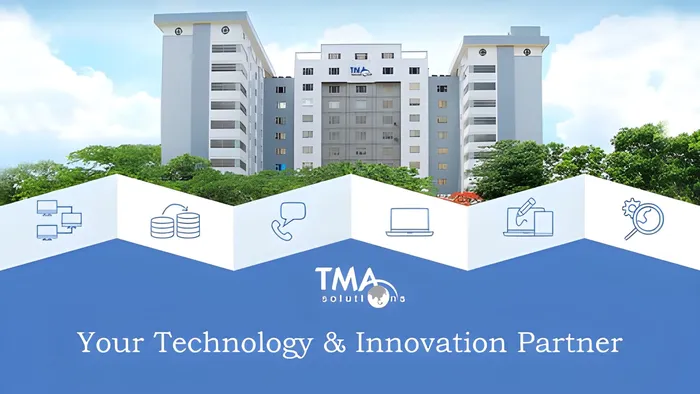
TMA Solutions is one of the oldest and most established software outsourcing companies in Vietnam. Founded in 1997, it has grown into a large engineering organization with more than 4,000 engineers and a broad international client base. The company positions itself as a long-term technology partner with strengths in both traditional outsourcing and newer areas such as AI, cloud, 5G, and hardware integration.
Compared with more product-oriented vendors, TMA feels more like an engineering-led outsourcing firm. It is particularly relevant for buyers who care about technical depth, delivery stability, and long-term offshore capability.
Key Strengths
- Strong foundation in telecom, embedded systems, and enterprise software
- Broad technical coverage across AI/ML, cloud, IoT, fintech, automotive, and data solutions
- Large and specialized engineering groups, including sizable teams in AI/ML and Microsoft technologies
- Mature quality and security posture, with certifications such as CMMI Level 5, ISO 9001, ISO 27001, and TL 9000 mentioned across its materials
One thing that stands out about TMA is that it is not just selling generic software development. It repeatedly emphasizes technical centers and specialized R&D capability, which makes it more credible for clients with engineering-heavy requirements than many generalist firms.
Working Style
TMA is best suited to clients who are comfortable with a structured offshore delivery model. In practical terms, that usually means:
- More formal project management
- Clearer documentation and QA processes
- Stronger specialization by technical domain
- Better fit for long-running engagements than quick experimental builds
That structure is an advantage if you need consistency and scale. It is less ideal if you want a highly fluid collaboration model with rapid product pivots every week.
Best For
- Companies needing stable long-term offshore development teams
- Projects involving telecom, embedded systems, hardware integration, AI, or cloud
- Buyers who value engineering strength and process maturity
- Organizations looking for a vendor with an established international outsourcing track record
Not Ideal For
- Very small startups
- MVPs that require frequent scope changes
- Brand-led digital products where UX and product iteration matter more than engineering scale
- Clients who prefer a highly informal, founder-to-developer working relationship
Pricing Insight
TMA generally sits in the mid range of Vietnam outsourcing. It is usually more affordable than premium internationalized vendors, but it is not positioned like a low-cost freelancer network either.
You are typically paying for:
- Engineering scale
- Technical breadth
- Process maturity
- Long-term delivery reliability
So the value proposition is not “fastest” or “cheapest.” It is more about dependable engineering capacity at Vietnam pricing.
 Pros & Cons
Pros
- Long-established reputation in Vietnam outsourcing
- Strong engineering and technical specialization
- Broad industry and technology coverage
- Suitable for long-term offshore engagement models
Cons
- Less product- and UX-oriented than boutique digital teams
- Not the most agile choice for fast-moving startup work
- Can feel more engineering-driven than business-outcome-driven
Quick Verdict
TMA Solutions is a strong option if you need an outsourcing partner with technical depth, delivery stability, and long-term engineering capacity.
Best when you need structured engineering execution
Less ideal when you need speed, product iteration, and a modern digital product mindset
5. KMS Technology
Product-Oriented Software Outsourcing with Strong QA & Engineering Discipline
Website: https://kms-technology.com
Founded: 2009
Typical Rate: ~$30–$55/hour
Scale: Mid-to-large (Vietnam + US presence)
Primary Focus: Product engineering, QA, and software development
 Overview
KMS Technology is one of the more product-oriented outsourcing companies in Vietnam, positioned between traditional outsourcing vendors and product companies.
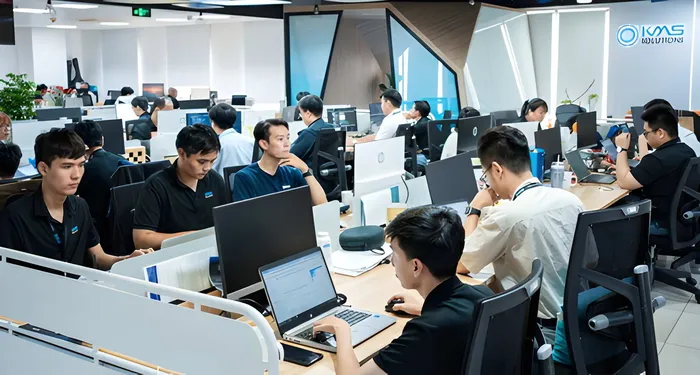
Unlike firms that focus purely on delivering development resources, KMS emphasizes engineering quality, testing discipline, and product thinking. The company also has experience building its own products, which influences how it approaches client work.
This makes KMS particularly relevant for companies that care about code quality, maintainability, and long-term product stability.
Key Strengths
I. Strong QA & Testing Expertise
KMS is widely recognized for its strength in software testing and quality assurance, including:
- Test automation frameworks
- Performance testing
- QA process design
- Continuous testing in CI/CD pipelines
This is one of the areas where KMS clearly stands out compared to many competitors.
II. Product Engineering Mindset
Because of its background in product development, KMS tends to:
- Focus on long-term maintainability
- Apply structured engineering practices
- Emphasize clean architecture and scalability
This is different from vendors that prioritize speed over structure.
III. Balanced Technical Capability
KMS offers a broad range of capabilities:
- Web and mobile development
- Cloud-based systems
- SaaS platforms
- Data and analytics solutions
 Not niche, but well-rounded with solid execution quality.
IV. Mature Agile Practices
KMS typically works with:
- Agile / Scrum methodologies
- Sprint-based development
- Defined workflows and QA integration This creates a balance between:
- Flexibility
- And engineering discipline
Working Style
KMS operates with a structured but product-aware delivery model. What to expect:
- Clear development processes
- Integrated QA from early stages
- Regular sprint planning and reviews
- More documentation than boutique teams
Compared to Dicom:
- Less flexible
- More structured
Compared to FPT:
- More product-focused
- Less bureaucratic
Best For
KMS Technology is best suited for:
- SaaS companies
- Product teams scaling their engineering
- Businesses that require strong QA and reliability
- Projects where long-term maintainability matters
 Not Ideal For
KMS may not be the best fit for:
- Very fast MVP builds
- Projects requiring constant pivots
- Startups prioritizing speed over structure
- Ultra low-budget outsourcing
 Pricing Insight
KMS is positioned in the mid-to-high range within Vietnam.
Pricing reflects:
- Strong QA capability
- Engineering discipline
- Product-oriented processes
You’re paying for quality and stability, not just development hours.
Pros & Cons
 Pros
Pros
- Strong QA and testing capabilities
- Product-oriented mindset
- Good balance of structure and flexibility
- Reliable engineering quality
 Cons
Cons
- Higher cost than many local vendors
- Slower than boutique teams for rapid iteration
- Less flexible for experimental projects
Positioning Insight
KMS sits between:
- Enterprise vendors (FPT, TMA)
- Boutique agile teams (Dicom)
It offers a middle ground:
- More structured than small teams
- More product-focused than large vendors
Quick Verdict
KMS Technology is a strong choice if you need:
High-quality engineering + strong QA + long-term reliability
Rather than:
Maximum speed or lowest cost
6. Axon Active
Dedicated Offshore Development Teams with Strong Agile Culture
Website: https://www.axonactive.com
Headquarters: Switzerland (Vietnam as main delivery hub)
Typical Rate: ~$30–$50/hour
Model: Dedicated development teams
 Overview
Axon Active is a well-established outsourcing company in Vietnam that focuses on a dedicated team model, rather than traditional project-based outsourcing.
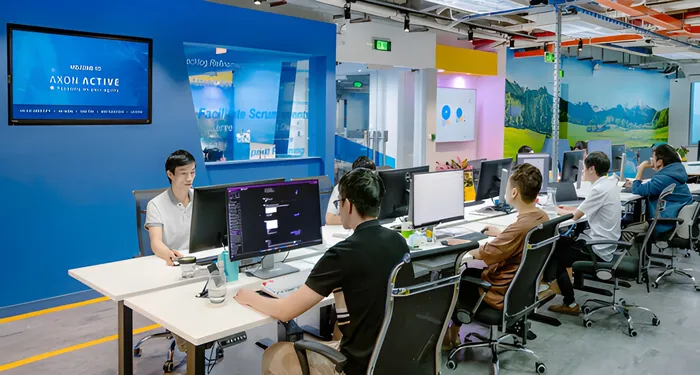
Instead of delivering fixed-scope projects, Axon Active typically builds long-term development teams that work closely with clients as an extension of their internal organization.
This model makes it particularly suitable for companies that want continuity, stability, and long-term collaboration.
Key Strengths
I. Dedicated Team Model
Axon Active’s core offering is not just development, but team continuity:
- Stable team structure over time
- Long-term developer retention
- Close integration with client workflows
This reduces knowledge loss and onboarding overhead.
II. Strong Agile Culture
Axon Active is known for its emphasis on Agile methodologies, including:
- Scrum practices
- Daily standups and sprint cycles
- Continuous improvement mindset
This creates a structured but collaborative environment.
III. High Team Stability
Compared to many outsourcing providers, Axon Active puts strong emphasis on:
- Employee retention
- Team consistency
- Long-term engagement
This is a major advantage for multi-year projects.
IV. European-Oriented Delivery
With Swiss roots, Axon Active aligns well with:
- European business culture
- Communication expectations
- Project governance standards
Working Style
Axon Active operates differently from both large vendors and boutique teams. What to expect:
- Long-term team setup (not short projects)
- Structured Agile processes
- Consistent team members over time
- Gradual scaling rather than rapid changes
Compared to Dicom:
- More stable, less flexible
 Compared to FPT:
- More collaborative, less hierarchical
Best For
Axon Active is best suited for:
- Companies building long-term products
- Businesses that want a dedicated offshore team
- Organizations prioritizing team stability and continuity
- European companies looking for cultural alignment
Not Ideal For
Axon Active may not be suitable for:
- Short-term or one-off projects
- MVPs that require rapid experimentation
- Companies needing quick scaling up/down
- Clients looking for the lowest-cost option
Pricing Insight
Axon Active sits in the mid-to-high pricing range in Vietnam.
Pricing reflects:
- Stable team structure
- Long-term engagement model
- Strong Agile practices
You are paying for consistency and reliability over time.
Pros & Cons
Pros
- Strong team stability
- Mature Agile practices
- Good for long-term collaboration
- Reliable delivery over time
 Cons
Cons
- Less flexible for short-term needs
- Not optimized for rapid iteration
- Slower scaling compared to some vendors
Positioning Insight
Axon Active sits in a distinct category:
Dedicated team / long-term partnership model
Compared to others:
- FPT / TMA → scale & enterprise
- KMS → product + QA
- Dicom → speed & flexibility
- Axon Active → stability & continuity
Quick Verdict
Axon Active is a strong choice if you need:
A stable, long-term offshore development team
Rather than:
Fast, short-term project execution
7. Rikkeisoft
Fast-Growing Vietnam Outsourcing Company with Broad Technology Coverage
Website: https://rikkeisoft.com
Founded: 2012
Typical Rate: usually in the sub-$30 to mid-market range, depending on team mix and scope
Scale: around 2,000 employees in recent company materials, with offices across Vietnam and international expansion including the US and South Korea.
 Overview
Rikkeisoft is one of the more visible software outsourcing companies in Vietnam, especially among buyers looking for a partner that combines traditional outsourcing services with newer digital transformation and AI offerings. On its official site, the company positions itself as a Vietnamese IT provider offering software development, managed services, QA, system migration, cloud, blockchain, data analytics, SAP, Salesforce, and AI services.
Compared with older firms like TMA or enterprise giants like FPT, Rikkeisoft feels more like a fast-scaling, broad-coverage outsourcing company. It is less tightly defined by one niche and instead presents itself as a flexible provider across many industries and technologies, including finance, retail and eCommerce, logistics, IoT, manufacturing, automotive, healthcare, and media.
Key Strengths
I. Broad service catalogue
Rikkeisoft covers a wide set of outsourcing and digital services, including:
- Custom software development
- Web and mobile development
- Managed services
- QA and testing
- System migration
- Cloud, blockchain, and data solutions
- AI services and AI products.
This makes it attractive to buyers who want a vendor that can support multiple types of work under one umbrella.
II. Strong “modern tech” positioning
Rikkeisoft places a noticeable emphasis on AI and digital transformation, which gives it a more current market image than firms that still read primarily as legacy outsourcing providers. The company explicitly markets AI services such as generative AI solutions, computer vision, predictive analysis, and speech processing.
III. Scaling capability with Vietnam cost advantage
Recent company materials indicate Rikkeisoft reached about 2,000 employees and continued international expansion, suggesting it has moved beyond boutique status and can support larger delivery needs than small or mid-size studios.
IV. Multi-city Vietnam footprint
Rikkeisoft has offices in Hanoi, Ho Chi Minh City, and Da Nang, which is useful from a hiring and delivery resilience standpoint.
Working Style
Rikkeisoft appears to sit somewhere between a generalist outsourcing vendor and a digital transformation partner.
In practice, buyers should expect:
- More scale and breadth than a boutique team
- Broader technology coverage than a niche specialist
- Less enterprise heaviness than firms like FPT
- A stronger sales positioning around innovation, AI, and transformation than some traditional outsourcing companies.
That combination can be useful if you want a single vendor for multiple technology tracks, but it also means Rikkeisoft may feel less sharply specialized than firms known for one core strength.
Best For
Rikkeisoft is best suited for:
- Companies that want a broad-capability outsourcing partner
- Clients looking for a mix of software development + digital solutions + AI positioning
- Businesses that need a vendor with more scale than a boutique team, but not necessarily the size and overhead of FPT
- Organizations operating across sectors like finance, retail, logistics, manufacturing, or healthcare.
 Not Ideal For
Rikkeisoft may be less ideal for:
- Buyers looking for a deeply specialized boutique product team
- Projects where UX/product craftsmanship is more important than delivery breadth
- Vlients that want the strongest possible enterprise governance and process rigor
- Founders seeking a very lean, highly direct working relationship with a tiny senior team
Pricing Insight
Public third-party profiles place Rikkeisoft broadly in the cost-competitive to mid-market range, often below premium internationalized vendors and above very small local shops.
That usually means the value proposition is:
- Broader delivery capability than a small team
- More affordability than premium global vendors
- Enough scale for medium-to-large engagements without enterprise-level pricing
Pros & Cons
Pros
- Broad service offering across development, cloud, QA, migration, and AI
- Larger scale than boutique vendors
- Modern market positioning around AI and digital transformation
- Multiple offices in Vietnam and growing international presence.
Cons
- Less sharply differentiated than more specialized firms
- May not be the best fit for highly product-led or design-led work
- Not as enterprise-heavy as top-tier global vendors, which can matter for very large regulated environments
Quick Verdict
Rikkeisoft is a solid option if you want a fast-growing Vietnam outsourcing partner with broad technology coverage and modern digital positioning.
Best when you want range, scalability, and competitive pricing
Less ideal when you want deep specialization, boutique collaboration, or top-end enterprise rigor
8. SotaTek
Fast-Growing Vietnam Outsourcing Company with Broad Digital Transformation and Emerging Tech Capabilities
Website: https://www.sotatek.com
Founded: 2015
Typical Rate: generally mid-market, depending on service line and seniority
Scale: Large and growing, with international expansion and multiple regional offices
Overview
SotaTek is one of the more aggressively expanding software outsourcing companies in Vietnam. Compared with older firms that built their reputation around traditional offshore development, SotaTek presents itself as a digital transformation and technology solutions provider with a broad service offering that spans custom software, AI, blockchain, cloud, managed services, SAP, CRM, IoT, and enterprise solutions. Its current site emphasizes software development, managed IT services, and consulting, especially for Australia and New Zealand, while also positioning the wider group as a global technology organization.
What makes SotaTek notable is not just its growth, but the way it markets itself: it is less narrowly defined than firms focused mainly on enterprise outsourcing or product engineering. Instead, it tries to cover a wide spectrum of client needs, from web apps and mobile apps to AI, blockchain, infrastructure, and managed services. That makes it attractive to buyers who want a vendor with range and modern technology positioning, rather than one strongly tied to a single niche.
Key Strengths
I. Broad service portfolio
SotaTek offers an unusually wide set of services for a Vietnam outsourcing company, including:
- Custom software development
- Web and mobile app development
- Managed services and IT consulting
- AI and machine learning
- Blockchain development
- SAP development
- IoT and cloud-related services.
This breadth makes it a realistic option for clients who want one vendor that can support multiple streams of work instead of coordinating several specialist partners.
II. Strong “modern tech” positioning
SotaTek leans heavily into newer technology categories such as AI, blockchain, and cloud transformation. On its current site, the company highlights AI development, AI chatbot work, and AI-powered delivery as part of its positioning, while also continuing to promote blockchain and enterprise solutions.
That gives it a more innovation-led image than many traditional outsourcing firms in Vietnam.
III. International growth and market reach
SotaTek presents itself as a global technology group with over a decade of delivery experience and highlights milestones such as expansion into Japan and Australia, service for SMEs and MNCs in multiple countries, and growth through a broader ecosystem of related businesses. Its current site also shows offices and market targeting beyond Vietnam, especially ANZ.
IV. Client visibility and market-facing brand
Compared with some engineering-led vendors, SotaTek is more visible in sales and marketing. It showcases a wide customer list and frames itself as a partner for growth-focused businesses, which can help with trust and brand recognition in international markets.
Working Style
SotaTek appears to operate somewhere between a generalist outsourcing company and a digital transformation consultancy.
In practice, that usually means:
- Broader solution-led sales
- More emphasis on technology stacks and innovation categories
- Flexibility to serve startups, SMEs, and larger businesses
- Less narrow specialization than firms that dominate in one area only
This can be a strength if your project spans multiple domains. It can also mean the company feels less sharply defined than a boutique specialist or a highly focused enterprise vendor.
Best For
SotaTek is best suited for:
- Businesses looking for a broad-capability outsourcing partner
- Clients interested in modern technologies such as AI, blockchain, and cloud solutions
- Organizations that want one vendor covering development, consulting, and support
- Companies in Australia, New Zealand, and Asia-Pacific that value regional alignment and international delivery options.
Not Ideal For
SotaTek may be less ideal for:
- Buyers who want a highly specialized boutique product team
- Projects where deep UX/product craftsmanship is more important than technology breadth
- Companies that need the strongest enterprise governance and process rigor
- Clients who prefer a very small, senior-only team with direct founder-level collaboration
Pricing Insight
SotaTek generally sits in the mid-market range for Vietnam outsourcing. It is usually not positioned as a budget-only vendor, but it is also not typically sold like a premium Western-priced consultancy.
The value proposition is more about:
- Broad service coverage
- Modern technology capability
- Competitive offshore pricing
- Enough scale to support larger engagements than a small studio
So the pricing logic is usually:
Broader capability than boutique teams
More cost-efficient than premium international firms
Pros & Cons
Pros
- Very broad service offering across software, AI, blockchain, cloud, SAP, and managed services
- Strong modern market positioning
- Growing international footprint
- Suitable for clients that want one partner for multiple technology tracks.
 Cons
Cons
- Less sharply specialized than firms known for one core strength
- May feel more sales-led than deeply product-led in some cases
- Not the clearest choice if you want either pure enterprise rigor or pure boutique agility
Quick Verdict
SotaTek is a solid option if you want a fast-growing Vietnam outsourcing partner with broad digital transformation capabilities and strong emerging-tech positioning.
Best when you want range, flexibility across service lines, and modern technology coverage
Less ideal when you want deep specialization, boutique product collaboration, or top-tier enterprise discipline
9. Saigon Technology
Mid-Sized Vietnam Software Outsourcing Company with Strong Agile Delivery and Broad Service Coverage

Website: https://saigontechnology.com
Founded: 2012
Typical Rate: generally mid-market for Vietnam outsourcing
Scale: 400+ developers, 14+ years in business, 3 software development centers in Vietnam, and 300+ clients worldwide according to its current site.
Overview
Saigon Technology positions itself as an AI-driven software development company in Vietnam with a broad service range spanning custom software, offshore development, AI, web and mobile apps, MVP development, QA, DevOps, and infrastructure services. Its current site emphasizes both software outsourcing and product development support, with engagement models including offshore development center, fixed price, staff augmentation, dedicated development team, and BOT.
Compared with boutique firms, Saigon Technology looks more like a well-structured mid-sized outsourcing company. Compared with enterprise giants, it is smaller, more flexible, and more commercially accessible for SMEs and product teams.
Key Strengths
I. Broad development capability
Saigon Technology covers a wide range of services, including:
- Custom software development
- Web application development
- Mobile app development
- MVP software development
- SaaS application development
- Legacy modernization
- Software integration
- Software QA testing
- DevOps and maintenance.
That makes it a practical option for buyers who want a vendor that can support both initial product builds and ongoing engineering work.
II. Strong outsourcing model flexibility
One of its clearest strengths is the number of engagement models it supports:
- Offshore model
- Fixed price
- Staff augmentation
- Dedicated development team
- BOT model.
This gives clients more options than many smaller vendors, especially if they are unsure whether they need project delivery or team extension.
III. Product and MVP friendliness
Saigon Technology explicitly markets MVP development, web apps, mobile apps, and SaaS builds, which suggests it is more aligned with startup and product company needs than vendors whose heritage is primarily telecom or embedded systems. Its site also highlights Agile methods and customer-first delivery.
IV. Strong credibility signals
The company highlights ISO certification, recognition as one of Vietnam’s Top 10 ICT Companies, and a Best Place to Work 2025 award, alongside a 5-star Clutch rating claim on its homepage.
These are useful trust signals for overseas buyers evaluating vendor maturity.
Working Style
Saigon Technology appears to operate with a structured but still commercially agile delivery model.
In practice, buyers should expect:
- More formal delivery than a boutique studio
- Stronger process and QA than many small agencies
- More flexibility than enterprise-heavy vendors
- A mix of outsourcing discipline and product-oriented execution.
This makes it a fairly balanced choice for companies that want a vendor that is neither too small nor too bureaucratic.
Best For
Saigon Technology is best suited for:
- SMEs and mid-sized businesses
- Startups building web, mobile, SaaS, or MVP products
- Companies that want multiple engagement model options
- Clients that need a balance of quality, flexibility, and outsourcing maturity.
 Not Ideal For
Saigon Technology may be less ideal for:
- Ultra-large enterprise transformation programs
- Projects requiring the deepest niche specialization in one vertical
- Founders who want a very small, senior-only, highly direct collaboration model
- Buyers seeking the absolute lowest-cost outsourcing option
Pricing Insight
Saigon Technology generally sits in the mid-market range of Vietnam outsourcing. Its positioning suggests clients are paying for:
- Broader service coverage
- Stronger process and QA discipline
- Multiple delivery models
- Enough scale to support ongoing product work without enterprise-level overhead.
So the value proposition is not “cheapest vendor,” but rather balanced capability with relatively accessible pricing.
Pros & Cons
Pros
- Wide service coverage across software, AI, QA, DevOps, and maintenance
- Multiple engagement models
- Stronger process maturity than many small vendors
- Suitable for both outsourcing and product-style work.
Cons
- Less specialized than niche firms
- Less enterprise-scale than top-tier giants
- May feel more structured than founders want for very early-stage, highly fluid product development
Quick Verdict
Saigon Technology is a strong choice if you want a balanced Vietnam outsourcing partner with:
- Enough scale to be reliable
- Enough flexibility to support product work
- Enough breadth to cover web, mobile, QA, DevOps, and MVP development.
Best when you want a middle ground between boutique agility and enterprise structure
 Less ideal when you want extreme specialization or ultra-high enterprise governance
10. Kyanon Digital
Digital Transformation and Software Development Partner with Strong eCommerce and Experience-Led Positioning
Website: https://kyanon.digital
Founded: 2012
Typical Rate: generally mid-to-upper mid-market for Vietnam outsourcing
Scale: 500+ people, 13 years in Agile engineering and software development according to its current careers page.
Overview
Kyanon Digital positions itself as a Vietnam-based digital and technology group that helps businesses achieve growth and impact through end-to-end technology solutions. Its current messaging goes beyond pure software outsourcing and leans more toward digital transformation, customer experience, eCommerce, and software engineering.
Compared with traditional outsourcing vendors, Kyanon Digital feels more like a hybrid between a digital transformation consultancy, product engineering firm, and implementation partner. That makes it especially relevant for companies that do not just need developers, but also want support around strategy, customer journeys, and digital business execution.
Key Strengths
I. Strong digital transformation positioning
Kyanon Digital explicitly promotes consulting and execution across:
- Digital strategy
- Customer intelligence
- MarTech and customer experience optimization
- AI and data-driven transformation
- Scalable solution implementation.
This gives it a broader business-facing angle than many development-only outsourcing firms.
II. Good fit for eCommerce and customer-facing platforms
The company has repeatedly positioned itself around eCommerce, logistics, and digital customer experience. It was recognized in Vietnam’s Top 10 Digital Technology Companies 2024 in the field of eCommerce and Logistics Solutions, which reinforces that specialization.
That makes Kyanon Digital more compelling for retail, commerce, and customer-experience-heavy projects than firms that are stronger in telecom, embedded systems, or generic offshore development.
III. Broad engineering capability
On its current software engineering and development pages, Kyanon Digital highlights:
- Full stack software development
- Enterprise software development
- AI/ML capability
- Web technologies such as React, Vue, Angular
- Backend stacks such as Node.js, .NET, Java, Python
- Cloud platforms including AWS and GCP.
This suggests that while the company markets itself through “digital impact” language, it still has credible software engineering breadth underneath.
IV. Strong client-facing delivery signals
Kyanon Digital’s site includes multiple client testimonials that emphasize:
- Responsiveness
- Clear project management
- Ability to meet tight deadlines
- Adaptability
- Strong communication and knowledgeability.
For international buyers, these are useful signals because they suggest the company is not just technically capable, but also commercially mature in client handling.
Working Style
Kyanon Digital appears to work in a consultative, solution-led style rather than a pure “give us specs and we build” outsourcing model.
In practice, that usually means:
- More business-context discussion early in the engagement
- Stronger involvement in discovery, planning, and solution design
- More emphasis on user experience and measurable business value
- A delivery model that sits between agency-style consulting and software engineering execution.
This can be a strong advantage for companies that need a partner to help shape the solution, not just code it.
Best For
Kyanon Digital is best suited for:
- Businesses undergoing digital transformation
- Retail, eCommerce, logistics, and customer-facing platform projects
- Companies that want a partner combining strategy, UX, and software development
- Organizations that need a more consultative team than a pure staff-augmentation vendor.
Not Ideal For
Kyanon Digital may be less ideal for:
- Companies looking for the cheapest offshore team
- Highly infrastructure-heavy or embedded-system projects
- Buyers that want a very narrow specialist in one technical area only
- Clients who need the scale and governance level of top-tier enterprise giants
Pricing Insight
Kyanon Digital is generally best thought of as a mid-to-upper mid-tier Vietnam outsourcing option. The pricing logic is not bargain-first. Instead, clients are likely paying for:
- Stronger consulting involvement
- Digital transformation expertise
- Customer-experience orientation
- A blend of strategy and engineering.
So the value proposition is less about raw developer-hour cost, and more about higher-level execution quality for digital business initiatives.
Pros & Cons
Pros
- Strong digital transformation and customer-experience positioning
- Credible fit for eCommerce and logistics-related solutions
- Broad full stack engineering capability
- More consultative and business-aware than many outsourcing-only vendors.
Cons
- Less specialized than niche engineering firms in deeply technical verticals
- Likely more expensive than smaller local vendors
- May not be the best fit if you only want low-cost development capacity without consulting layers
Quick Verdict
Kyanon Digital is a strong option if you want a Vietnam technology partner that combines software engineering with digital transformation, eCommerce, and customer-experience thinking.
Best when you want strategy + execution + digital business understanding
 Less ideal when you want cheap development-only outsourcing or highly niche technical specialization